

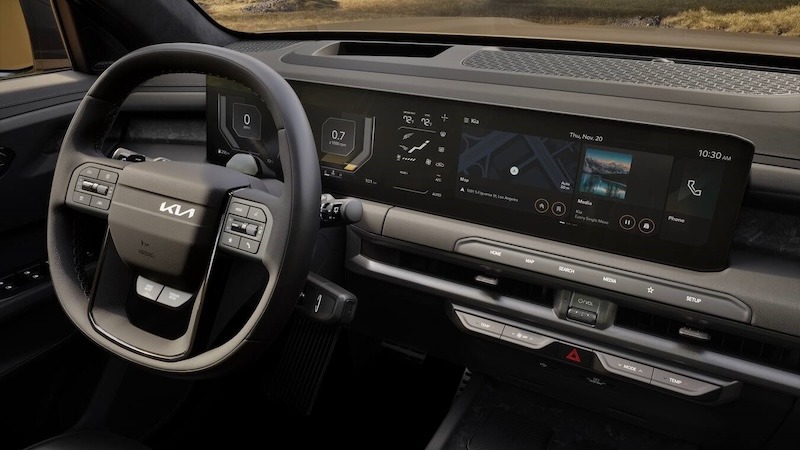
Advanced driver-assistance technology has shifted from a “nice bonus” to something many drivers rely on every single day.
From commuting through town to navigating busy highways or school pickup lines, these systems are designed to make everyday driving
feel more manageable, predictable, and less stressful.
For drivers around New Bern and across Eastern North Carolina, advanced driver-assistance systems (often called ADAS) play a
growing role in daily safety, comfort, and confidence behind the wheel.
What Is Advanced Driver-Assistance Technology?
Advanced driver-assistance technology refers to a group of safety systems that actively support the driver while the vehicle is in motion.
These features use cameras, sensors, and radar to monitor surroundings, detect potential hazards, and help reduce human error.
Instead of taking control away from the driver, modern driver assistance features act as an extra set of eyes, especially in situations where reaction time matters most.
Common examples include:
- Forward collision warning and collision avoidance
- Blind-spot collision avoidance
- Lane keep assist and lane following assist
- Rear cross-traffic alert
- Adaptive cruise control
- Driver awareness technology
Together, these systems form the backbone of modern vehicle safety features.
Why Driver Assistance Features Matter for Daily Driving
Everyday driving doesn’t usually involve dramatic moments. It is full of routine situations where attention can slip for just a second. That is exactly where advanced driver-assistance systems provide the most value.
Stop-and-Go Traffic
In city driving or highway congestion, features like adaptive cruise control and forward collision warning help maintain safe following distances and reduce fatigue during long commutes.
Lane Discipline on Highways
Lane keep assist and lane following assist help drivers stay centered, especially on long stretches of road or during late-day drives when focus naturally dips.
Parking Lots and Neighborhoods
Rear cross-traffic alert and blind-spot collision avoidance are especially helpful in tight parking areas, busy grocery store lots, and residential streets with limited visibility.
These are not features you think about constantly, but once you have them, driving without them feels noticeably different.
Are Advanced Driver-Assistance Systems Worth It?
For most drivers, yes, especially when the technology is well-integrated and easy to use.
The benefits of ADAS for city and highway driving include:
- Added confidence during busy commutes
- Reduced stress in unpredictable traffic situations
- Extra awareness in blind spots and low-visibility areas
- Helpful support for new drivers and experienced drivers alike
Driver assistance systems are not about replacing skill. They are about backing it up with technology that responds faster
than human reflexes when something unexpected happens.
Kia Safety Technology and Everyday Confidence
Kia has built a strong reputation around safety technology that feels intuitive, not overwhelming. Many Kia vehicles come equipped with
Kia Drive Wise safety features, which bundle advanced driver assistance technology into systems that work seamlessly
in the background.
Depending on the model and trim, Kia safety technology may include:
- Forward Collision-Avoidance Assist
- Blind-Spot Collision-Avoidance Assist
- Lane Keeping Assist
- Highway Driving Assist
- Driver Attention Warning
For drivers shopping at Kia of New Bern, this means access to safety technology designed for real daily use, not just spec sheets.
Is ADAS Helpful for New Drivers?
Advanced driver-assistance systems are especially valuable for newer drivers who are still building confidence and situational awareness.
Features like lane keep assist, forward collision warning, and blind-spot monitoring provide helpful feedback without being intrusive.
They reinforce good driving habits while offering a safety net during learning curves.
At the same time, experienced drivers benefit from reduced fatigue and improved awareness during long or repetitive drives.
Do Driver Assistance Systems Reduce Accidents?
Studies consistently show that modern vehicle safety features can help reduce certain types of collisions, especially rear-end accidents and lane-departure incidents.
No system replaces attentive driving, but safety technology for daily driving adds meaningful protection in moments where human reaction time alone may fall short.
What Safety Technology Comes Standard on Kia Vehicles?
Standard safety technology varies by model and trim, but many Kia vehicles include driver assistance features that were once reserved
for luxury brands.
If you are shopping for safe Kia vehicles in North Carolina, it is worth taking time to compare trims and understand which advanced driver-assistance technology fits your driving habits best.
Why This Matters for New Bern Drivers
Between local traffic, coastal weather changes, and regular highway driving, everyday driving safety technology plays a real role in how comfortable and confident drivers feel behind the wheel.
Kia driver assistance technology near New Bern is designed to support drivers through those daily routines quietly, consistently,
and without distraction.
Why This Tech Makes Daily Driving Easier
Advanced driver-assistance technology is not about flashy innovation. It is about small, steady improvements that make everyday driving safer, calmer, and more predictable.
If you are curious about Kia safety features in New Bern NC, the team at Kia of New Bern can walk you through how these systems work
in real driving situations and help you decide which features make the most sense for your daily routine.
Connect with us


 Warranties include 10-year/100,000-mile powertrain and 5-year/60,000-mile basic. All warranties and roadside assistance are limited. See retailer for warranty details.